Acupuncture
Traditional Chinese Medicine
What is acupuncture?
How does acupuncture work?
How can acupuncture release pain?
What are the needles like? Do they hurt?
Does acupuncture really work?
How many treatments will I need?
Are there any side effects to the treatment?
Acupuncture
Acupuncture is a method that promotes natural healing and improve functioning. This is done by inserting needles and applying heat and electrical
stimulation at very precise acupuncture points on the body to relieve pain and treat diseases.
How does acupuncture work?
The Chinese developed acupuncture centuries ago in accordance with the theory that energy flows through channels between the surface of the body
and internal organs. These energy channels are called meridians. There are a lot of acupuncture points on the human body that connect with 12 main
and eight secondary “meridians” or channels. There is a vital life energy, called Qi (pronounced ” chi), circulating within the body. , Meridian are like rivers
within your body. whenever a river flows, It brings with it water that provides nourishment and life to the land, plants and people around it.Meridians
transport life Qi that provides nourishment to every cell, tissue, muscle, organ and gland in the body. It is important for Qi to flow freely throughout the
body. A blockage in the flow of Qi anywhere in the body will inhibit the amount of nourishment that reaches our tissue and muscle.organ and gland. The
meridians can be influenced by placing needles in the acupuncture points,The acupuncture needles unblocktions at dams, and reestablish the regular
flow through the meridians.Acupuncture treatment can therefore help the body’s internal organs to correct imblances in their digestion, absorption, and
energy production activities.and in the circulation of their energy through the meridians.
The Modern scientific explanation is that needing the acupuncture points stimulates the nervous system to release chemicals in the muscles, spinal,and
brain. These chemicals will either change the experience of pain, or they will trigger the release of other chemicals and hormones which influence the
body’s own internal regulating system.
The improved energy and biochemical balance produced by acupuncture results in stimulating the body’s nature healing abilities, and in promoting
physical and emotion well-being
Back to Top
How can acupuncture release pain?
Inserting fine,sterile needles at specific points, an acupuncturist is ables to break up blockages that have hampered the smooth flow of Qi. Once this is
done, Qi can travel freely through the body,promoting pain-free health,well-being and viality. Not only can acupuncture treat signs and symptoms of the
pain and discomfort, It can also get to the root of the problem. when the initial cause of the pain is corrected,your body can begin to heal on deeper
levels.
Western medicine’s view is that the placement of acupuncture needles at specific pain points releases endorphins and opioids, the body’s natural
painkillers, and perhaps immune system cells as well as neurotransmitters and neuro-hormones in the brain. Research has shown that glucose and
other bloodstream chemicals become elevated after acupuncture.
According to the National Institutes of Health’s National Center for Complementary and Alternative Medicine, there is also evidence that stimulating
acupuncture points enables electromagnetic signals to be relayed at a greater rate than under normal conditions. This may increase the flow of healing
or pain-killing natural chemicals to injured areas.
When pain is relieved, patients feel a greater sense of well-being overall, physically and emotionally. As a result, they may heal faster. Most acupuncture
points coincide with the “trigger points” described by Janet G. Travell, MD, whose textbook, Myofascial Pain & Dysfunction: The Trigger Point Manual, is
widely used at pain management centers in the Western world.
Back to Top
What are the needles like? Do they hurt?
Acupuncture needles are metallic and sterile, used once and discarded. Needles are solid (not hollow, as are hypodermic or vaccination needles) and are
slightly bigger than the width of human hair.
People experience acupuncture needling differently. Patients can feel the needle pierce the skin, Most patients feel only minimal pain as the needle are
insert; some feel no pain at all. Once the needles are in place, there are no pain feeling .Because your doctor carefully sterilizes the needle using the
same techniques as for surgical instruments, or uses disposable needle, there is no risk of infection from the treatment.
Back to Top
Does acupuncture really work?
Yes. In the past 2,000 years, more people have been successfully treated with acupuncture than with all other health modalities combined. Today
acupuncture is practiced widely in Asia, the soviet Union, and Europe. It is now being used more and more in America by patients and physicians.
Acupuncture treatments can be given at the same time other techniques are being used, such as conventional Western medicine,Osteopathic or
Chiropractic adjustments, and homeopathic or natureopathic prescriptions. It is important that your physician-acupuncturist know everything that you
are doing, so he or she can help you get the most benefit from all your treatments.
Back to Top
How many treatments will I need?
The number of treatments needed differs from person to person. For complex or long-standing conditions, one or two treatments a week for several
months may be recommended. For acute problems, usually fewer visits are required, and for health.
Any side effects to the treatment?
Usually not. As energy is redirected in the body, internal chemicals and hormones are stimulated and healing begins to take place. Occasionally the
original symptoms worsen for a few days, or other general changes in appetite, sleep, bowel or urination patterns, or emotional state may be triggered.
These should not cause concern, as they are simply indications that the acupuncture is starting to work. It is quite common with the first one or two
treatments to have sensation of deep relaxation or even mild disorientation immediately following the treatment. These pass within a short time, and
never require anything more than a bit of rest to overcome. 3,000-year history, acupuncture successfully addresses chronic ailments and manages pain.
Back to Top

Acupressure
Traditional Chinese Medicine
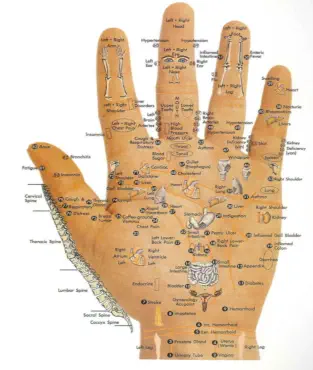
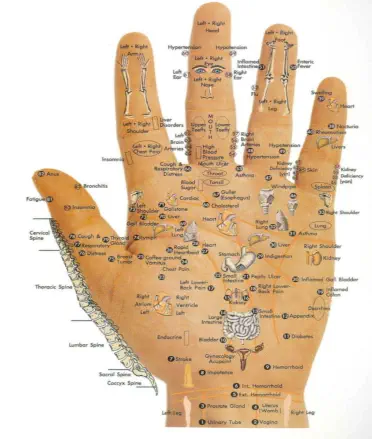
Acupressure (sometimes written as “accupressure”) is a technique related to acupuncture,
where the energies of the body are regulated by manipulating points on the body. This has
effects on the emotions, tension and physical conditions.
OTHER SERVICES
Traditional Chinese Medicine
Auricular Acupuncture
Traditional Chinese Medicine
Auricular therapy is the use of needles or seeds on the ear. The ear represents a microcosm of the whole body. The ear itself can be used as a single
aspect of treating the problems of the body. There are different types of protocols that can be used for weight loss, addictions, pain management,
mental issues such as depression and anxiety, chronic fatigue, skin conditions, high blood pressure and many more. Back to Top
Chinese Herb Medicine
Traditional Chinese Medicine
An herb is a plant or plant part used for its scent, flavor, or therapeutic properties. They are made as tablets, capsules, powders, teas, extracts, and
fresh or dried plants.
How is Chinese herbal medicine prescribed?
Chinese herbal medicines are prescribed either singly or made into formula which take into account the individual therapeutic action of each herb
and well as the effects when combined together. A well constructed formula maximizes the effectiveness for treating a particular condition, while
counteracting and minimizing the unwanted effects of an individual herb.
What conditions does Chinese herbal medicine treat?
In addition to providing effective treatment for a wide range of health disorders, Chinese herbal medicine may also be used to assist with general
health maintenance and disease prevention. By strengthening and enhancing normal body functions, the immune system is boosted and a general
sense of well-being promoted. Back to Top
Cupping
Traditional Chinese Medicine
Cupping is an ancient Chinese method of causing local congestion. A partial vacuum is created in cups placed on the skin either by means of heat or
suction. This draws up the underlying tissues. When the cup is left in place on the skin for a few minutes, blood stasis is formed and localized
healing takes place.
Cupping therapy has been further developed as a means to open the ‘Meridians’ of the body. Meridians are the conduits in the body through which
energy flows to every part of the body and through every organ and tissue. There are five meridians on the back that, when opened, allow
invigorating energy to travel the whole length of the body. It has been found that cupping is probably the best way of opening those meridians.
Cupping has also been found to affect the body up to four inches into the tissues, causing tissues to release toxins, activate the lymphatic system,
clear colon blockages, help activate and clear the veins, arteries and capillaries, activate the skin, clear stretch marks and improve varicose veins.
Cupping is the best deep tissue massage available. Cupping, the technique, is very useful and very safe . Back to Top
Electro acupuncture
Traditional Chinese Medicine
Acupuncture has been used for thousands of years as an effective therapy for regulating pain and managing many other functions of the body. A
number of different types of acupuncture have come into use over the centuries. Electroacupuncture (EA) was developed around the mid-1900s and
has been shown to significantly enhance traditional acupuncture treatments.
In clinical studies, EA has shown to be effective in treating a variety of conditions, particularly those that are chronic. The most obvious are pain,
muscle spasms and neurological issues. But because the electrical stimulation of acupuncture points can be used to activate a variety of systems
within the body, EA can be used to treat conditions as wide-ranging as heart disease, hypertension, nausea, weight gain and even skin problems.EA
uses the same points as acupuncture, and operates on a similar principle. The difference is that the needles are attached to a device that sends
electrical currents or pulses into the body. Electrical currents have stimulating effects, which can influence the cells, tissues and entire systems. While
most electrotherapy techniques are transcutaneous, only allowing the electricity to flow over the skin, EA channels it into the body with pinpoint
precision.
A typical EA treatment lasts for a minimum of 30 minutes. The frequency and intensity of the electricity used by the practitioner varies, based on the
patient and the condition being treated. During EA, you may experience tingling or mild involuntary muscle twitches. These are normal, temporary
effects of the electricity entering the body.
EA is very safe for most people; however it is not recommended for patients with a pacemaker or a history of seizures or epilepsy. Also, EA is
generally not used at higher intensities in the head or across the mid line of the body. As with any type of therapy, you should always have a solid,
highly individualized treatment plan mapped out by a highly skilled practitioner.
Standard acupuncture techniques, in the hands of a skilled practitioner, can be very powerful and may provide all of the relief you need. EA could be
looked at as an amped-up form of acupuncture. Ask your practitioner if electroacupuncture may be right for you.
Back to Top
Gua Sha
Traditional Chinese Medicine
Gua sha is a healing technique of traditional East Asian medicine. Sometimes called ‘ scraping’, Gua sha is defined as instrument-assisted
unidirectional press-stroking of a lubricated area of the body surface to intentionally create transitory therapeutic petechiae called ‘sha’
representing extravasation of blood in the subcutis.
Raising sha removes blood stagnation considered pathogenic in traditional East Asian medicine. Modern research shows the transitory therapeutic
petechiae produce an anti inflammatory and immune protective effect that persists for days following a single Gua sha treatment accounting for
the immediate relief that patients feel from pain, stiffness, fever, chill, cough, wheeze, nausea and vomiting etc, and why Gua sha is effective in
acute and chronic internal organ disorders including liver inflammation in hepatitis.
The technique is applicable in any hands on therapeutic practice, and will be of particular interest to acupuncturists, massage therapists, physical
therapists and any physician or nurse who work directly with patients. Back to Top
Heat Therapy
Traditional Chinese Medicine
Auricular therapy is the use of needles or seeds on the ear. The ear represents a microcosm of the whole body. The ear itself can be used as a single
aspect of treating the problems of the body. There are different types of protocols that can be used for weight loss, addictions, pain management,
mental issues such as depression and anxiety, chronic fatigue, skin conditions, high blood pressure and many more.
Tui Na Massage
Traditional Chinese Medicine
Tui na means push and grasp in Mandarin Chinese language. It is a type of massage therapy that has been used in China for the over 2000 years. It
can be used as a standalone treatment as well as an adjunctive treatment used with acupuncture. Tui na is used to massage the soft tissue of the
body and manipulate the flow of Qi within the energy channels of the body to get a harmonious flow of Qi throughout the body. This will allow the
healing processes of the body to heal naturally.
Back to Top